The Andes hantavirus crisis is a reminder of the challenges posed by animal-borne infections with epidemic potential, and of the need to strengthen the prevention, surveillance and detection of zoonotic pathogens. A conversation with Élodie Monchatre-Leroy, head of the RatSWIM project team (PEPR PREZODE).
The PEPR PREZODE RatSWIM project aims to assess whether pathogens carried by rats (Rattus norvegicus) are detectable in wastewater and can be monitored through it. The project seeks to establish proof of concept for four zoonotic pathogens. Rats are captured in sewers and wastewater is sampled simultaneously at the same location, to try to correlate the contamination of the two matrices.

Elodie Monchatre-Leroy is the head of the RATSWIM project team. A veterinarian by training, she devoted her doctoral thesis to the epidemiology of hantaviruses in rodents in eastern France. A specialist in virology, she is particularly interested in wildlife reservoirs. After heading ANSES’s Rabies and Wildlife laboratory for fourteen years, she is now a teacher-researcher in infectiology at UniLaSalle, attached to the IDEALISS research unit.
Which infectious diseases affecting humans are rodents likely to transmit? Which poses the greatest risk to humans?
Along with chiropterans (bats), rodents are among the animal orders most involved in the transmission of diseases to humans. They constitute a reservoir for many bacterial pathologies — such as plague, which is still present in certain parts of the world, or leptospirosis — and viral ones, in particular hantaviruses and HEV (Rocahepevirus ratti), the rat hepatitis virus. The latter was long considered non-zoonotic, but human cases are gradually emerging, with hepatic involvement.
Each hantavirus is associated with a specific animal reservoir. In France, two so-called “Old World” hantaviruses circulate primarily. The Seoul virus has as its reservoir: Rattus norvegicus, the brown rat or Norway rat, which is found particularly in cities. The Puumala virus, for its part, has as its reservoir the bank vole (Clethrionomys glareolus). Infections caused by these two hantaviruses are called hemorrhagic fever with renal syndrome, or HFRS. They vary in severity, ranging from the absence of symptoms or a more or less severe flu-like syndrome to renal failure. The case fatality rate of the Puumala virus is estimated at less than 1%, and that of the Seoul virus at a maximum of 10%. These two hantaviruses are not transmitted between humans.
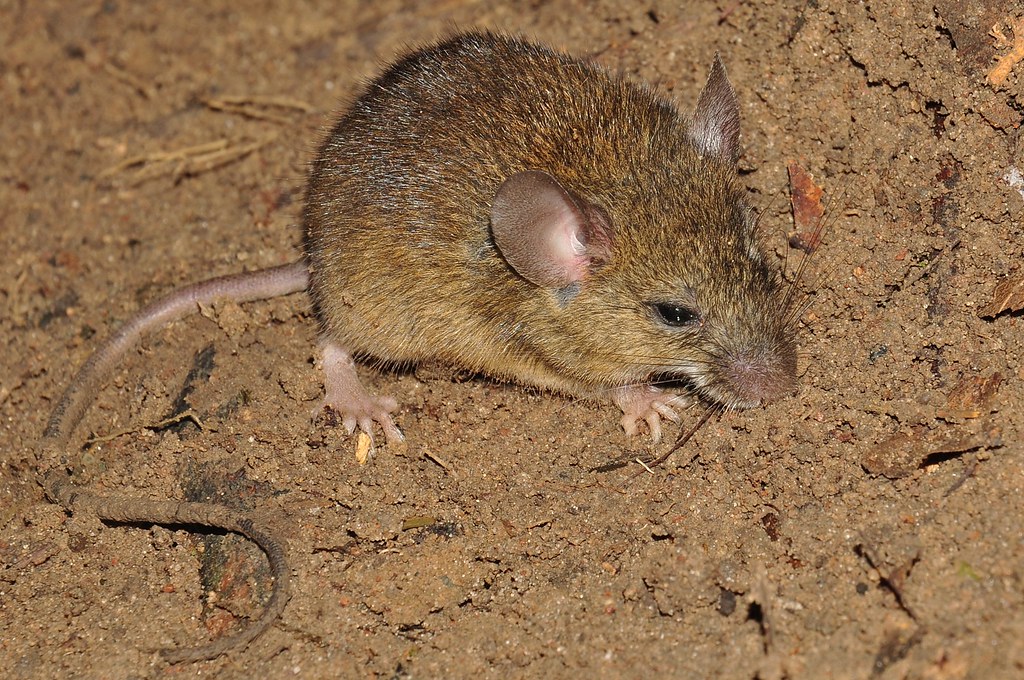
“Pygmy” rat -Oligoryzomys sp-, known to be reservoir of hantavirus Andes
The so-called “New World” hantaviruses circulate on the American continent. They include in particular the Andes virus, transmitted by a “pygmy” rat (Oligoryzomys sp.), and the Sin Nombre virus (“nameless” in Spanish), whose reservoir is Peromyscus maniculatus. These hantaviruses can give rise to human-to-human transmission, presumably by the respiratory route given their cardiopulmonary tropism. This transmission is not, however, comparable to that of a coronavirus: it requires closer and more prolonged contact.
It is important not to focus on a single hantavirus, and to remain cautious about generalizations.
Other hantaviruses also circulate in Europe and France, but their symptomatology remains poorly understood: they have been identified in wildlife without us knowing precisely what they can cause in humans. As with any virus, variations exist for each viral species, which can evolve over time; it is important to remain cautious about generalizations.
In your view, which factors most favor the interface between hantavirus-carrying rodents and humans?
In rodents, infection is, in principle, asymptomatic: the animal is in good health and excretes the virus, particularly through urine and feces. Human contamination occurs through the inhalation of airborne dust. For Puumala, it typically occurs in forests — when sweeping out a hunting cabin, working with wood or handling a pile of logs inhabited by rodents. Once rodents proliferate and are infected, viral exposure increases, and anyone frequenting these environments can become contaminated. This is how, in the United States, the Sin Nombre virus was identified in the 1990s on a Native American reservation, following heavy rains that led to abundant vegetation, then a proliferation of infected rodents and a significant number of human cases.
Each hantavirus is associated with a specific animal reservoir. To date, only one hantavirus has the potential for human-to-human transmission.
Transmission factors are highly variable, because the proliferation of rodents itself depends on environmental factors — weather, abundance of food, or landscape. These cycles of abundance are accompanied by dynamics specific to the circulation of the virus. When the rodent population is stable, so is the infection: the animals tolerate their virus and excrete it less. Conversely, in areas where the population is mobile and mixed, different viral variants can reach rodents that are unfamiliar with these strains, leading to outbreaks of infection — and more human contaminations.
Finally, risk factors depend on human activities and on the reservoir species. The Seoul virus is an exception: transmitted by the brown rat, an urban rodent, it can cause contamination in cities, in poorly maintained housing or in parks. Human cases of Seoul virus infection are rare in France.
The research project you lead, RATSWIM —Rodent Assessment Through Sewers and Sewage Water Impact on Mammals reservoir- focuses on primary surveillance of contamination routes, particularly via wastewater. Could you describe it for us?
Before RatSWIM, the team was working on a project called RATVAR, which aimed to understand whether SARS-CoV-2 — whose genome is detected in wastewater — could contaminate Rattus norvegicus living in sewers. The arrival of the Omicron variant — accompanied by a possible change in tropism — raised the question of a possible spillover of the virus to these rodents. It was important to verify that they were not becoming an animal reservoir, which would have been particularly worrying. The project demonstrated that they were not, and the results were published (Beissat et al., 2025). RATVAR had also made it possible to detect other pathogens infecting rats: the Seoul virus (hantavirus), leptospires, and HEV (rat hepatitis virus).
RatSWIM is a continuation of this work: the aim is to verify whether wastewater can serve as a surveillance tool for zoonotic pathogens circulating in rats, since the systematic capture of rodents is logistically impossible on the scale of genuine surveillance. The proof of concept covers four pathogens (Seoul, leptospires, HEV, poxvirus). Rats are captured and wastewater is sampled simultaneously at the same location, in order to try to correlate the contamination of the two matrices. A normalization step is also being tested by searching for rat DNA in wastewater to estimate population sizes.
The project focuses on the city of Lyon, partly for reasons of access — going down into the sewers is strictly regulated. An observation from RATVAR has reinforced interest in the approach: rats captured above ground show a markedly lower seroprevalence than those captured in the sewers for HEV and leptospires. This suggests that wastewater itself could constitute a risk factor for contamination, by facilitating the circulation of pathogens between rodents.
Today, rat captures have already begun. The teams are working on developing detection techniques for poxviruses and leptospires, as well as on the characterization of HEV, the least well-known of the four pathogens. Culturing has been successfully carried out, but genomic tools still need to be developed to determine whether the virus detected is whole and infectious. In parallel, the development of techniques for detecting rat DNA in wastewater is also underway, in order to estimate the sizes of rodent populations at the sites studied.
RATSWIM is one of the 11 projects of the PEPR PREZODE, one of the key programs of the France 2030 national strategy on “infectious diseases”. Could you explain the objectives of the PEPR and its complementarity with the PEPR MIE?
RatSWIM is one of the projects of the PEPR PREZODE, funded by France 2030 via the ANR (French National Research Agency). It focuses on the primary prevention of emerging or re-emerging zoonotic pathogens with pandemic potential (including pathogen X and antimicrobial resistance), upstream of spillover to humans.
This program is complementary to the PEPR MIE (Emerging Infectious Diseases), led by the ANRS, which is dedicated to responses to health crises and to new prevention and control tools (vaccines, diagnostics, treatments). Anchored in the One Health approach, these two PEPRs are complementary: they cover distinct stages of the emergence continuum, upstream and downstream of contaminations, while systematically integrating the human and social sciences.
The project brings together researchers from ANSES, the Institut Pasteur, the Institut de Recherche Biomédicale des Armées (Army Biomedical Research Institute), the LCPME of the Obepine+ Network, the CNR (National Reference Center), VetAgroSup and UniLaSalle.