As a scientific initiative, PREZODE and its experts regularly publish research articles, opinion papers, and commentaries in peer-reviewed journals.
PREZODE also leads, supports, and contributes to international studies dedicated to designing and implementing prevention strategies against emerging risks, through a One Health approach.
Below, you will find a selection of links to these works, policy briefs, and research projects.
Publications
- “PREZODE: a global co-designed collaboration for preventing zoonotic emergence.”
An article co-authored by key experts involved in the initiative and published in Nature Health in April 2026. The article details the process that led to PREZODE’s strategic agenda, the roadmap for operationalizing upstream prevention: a large-scale co-construction process involving scientists, communities, governments, and practitioners. It presents the three pathways of change: 1) Build the knowledge base for targeted, locally adapted prevention; 2) Place communities and collaboration at the heart of prevention. 3) Enable prevention through data governance, ethics, and sustainable financing. Read the article.
- The PREZODE Strategic Agenda
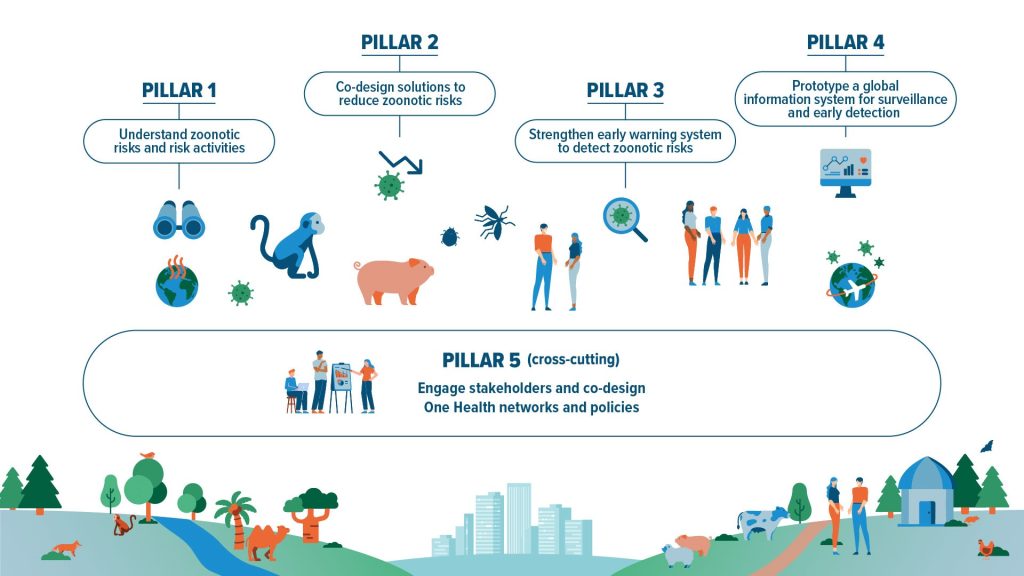
The research and operational roadmap of the Initiative explores a series of research themes, supporting surveillance and operational actions for each. The document details the knowledge gaps in research to be filled and the operational activities to be targeted over this timeframe in the medium and long term. It also provides a global impact pathway on how PREZODE will contribute to preventing emerging zoonotic diseases. See and download the Agenda.
- PREZODE: preventing zoonotic disease emergence
Published in The Lancet in February 2021, this article outlines the rationale behind the Initiative and the context in which it was launched. Co-authors: Marisa Peyre, Gwenaël Vourc’h, Thierry Lefrançois, Yves Martin-Prevel, Jean-François Soussana, Benjamin Roche.
Read the publication.
Policy Brief
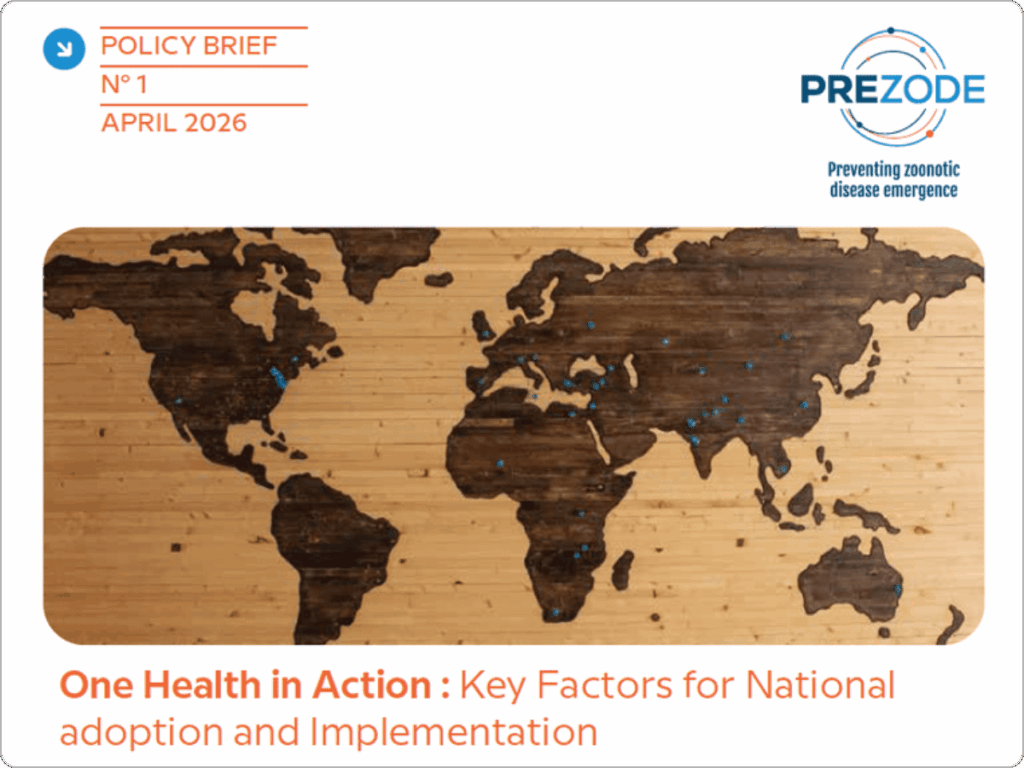
One Health in Action: From Institutional Commitment to Effective Prevention.
Based on a literature review, an international survey with more than 260 respondents from 80 countries, and expert interviews, the study provides one of the most comprehensive overviews of One Health governance worldwide. The results show that many countries—including low- and middle-income countries—have already institutionalized One Health through national platforms, policies, or scientific committees. However, institutionalization alone does not guarantee effective implementation.
Download the document